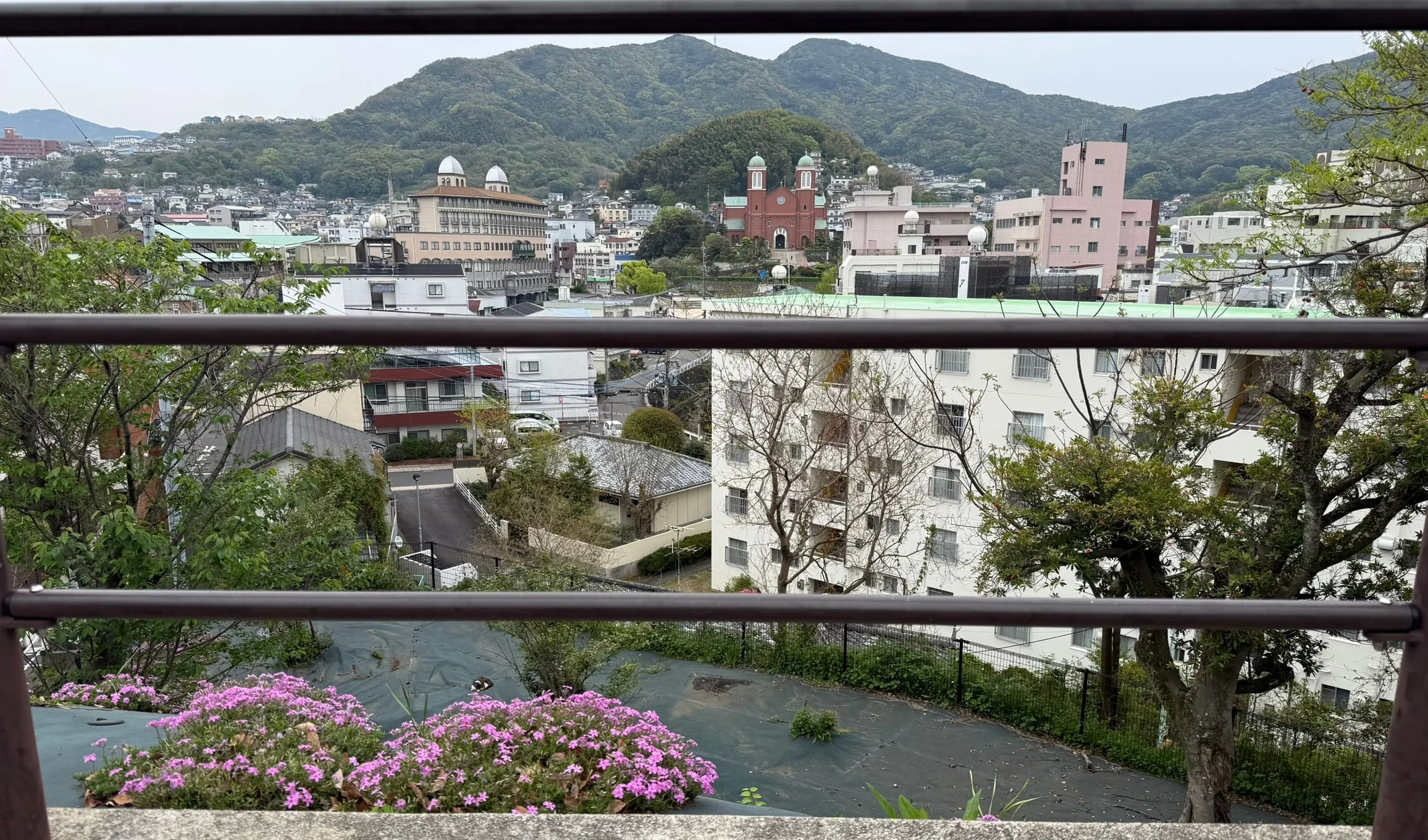
Nagasaki
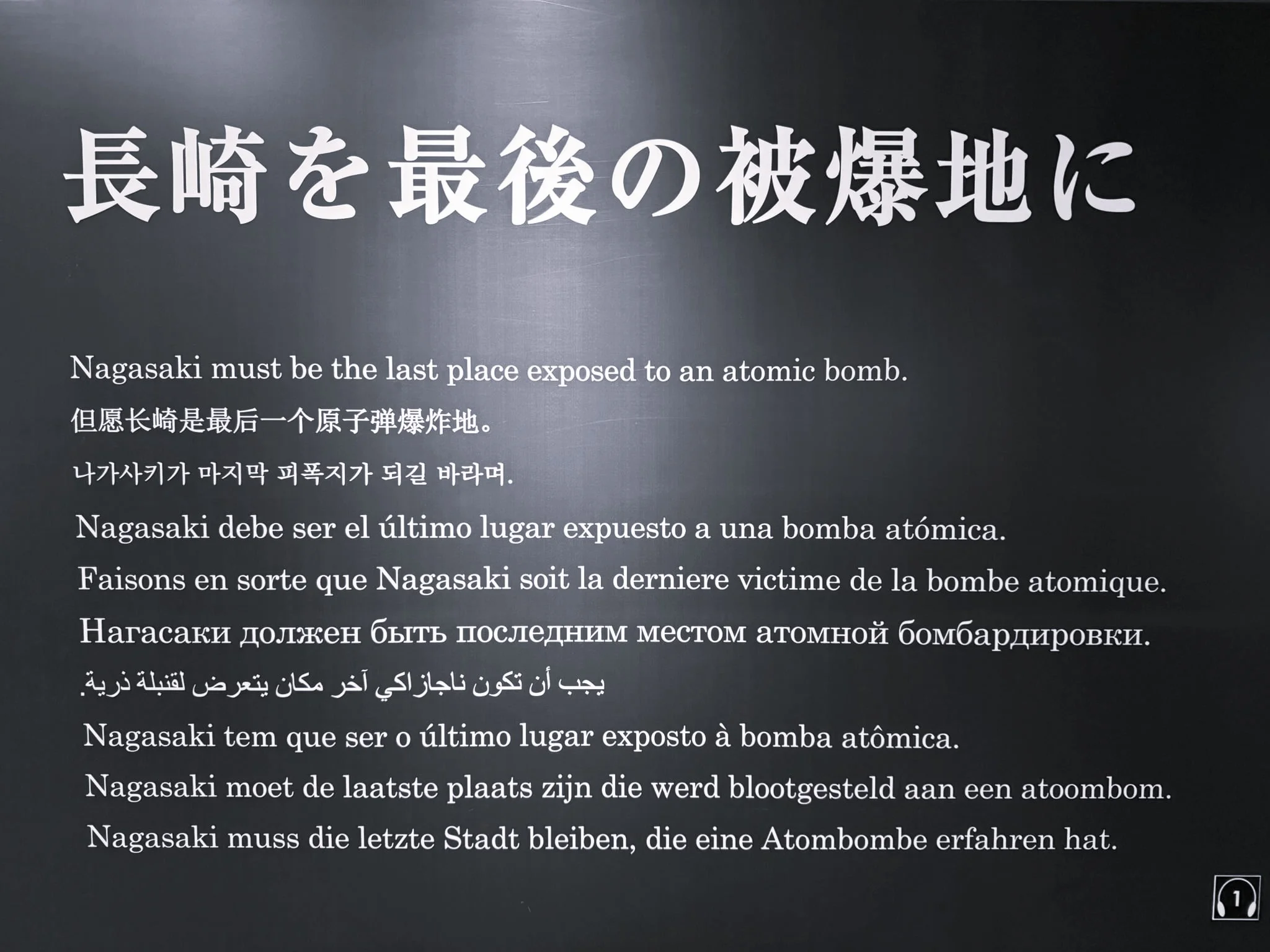
Everyone should visit the museum in Nagasaki (and Hiroshima). We should see with our own eyes the melted metal, the burned concrete, the glass fused with human bones. We should read the stories of the men, women, and children pulverized in an instant, of those who died begging (through what remained of their skins) for water, of those who survived the initial inferno only to die from the silent creep of radiation in the days that followed. We should see the elementary school, and the church, and the hospital on which we dropped the most devastating weapon invented. We should stare at the photos documenting how we laid waste to entire cities — cities where children played, where mothers nursed them, where people lived — leaving nothing but carbonized flesh and radiation poisoning in our wake.
We should see, also, that from these wastelands cities resurged. That Nagasaki once again has playgrounds. That this is a city where flowers bloom again.
I realized as I was leaving the museum that I have no memory of the moment I learned what an atomic bomb was, nor that the only atomic bombs used to date were employed by the United States against Japan, obliterating Hiroshima and Nagasaki. How could I not remember that, just like I crisply remember sitting on the floor of the music school library in sixth grade reading the Diary of Anne Frank, and the pit I felt in my stomach when I got to the end and realized what had happened? This lack of memory bothers me, because I think such memories are essential, that children should be taught to reckon with humanity’s past. One thing I’m certain about, though: I won’t forget this museum.