The Elements of Style
A compact English education, and why I asked Claude to stop writing for me.
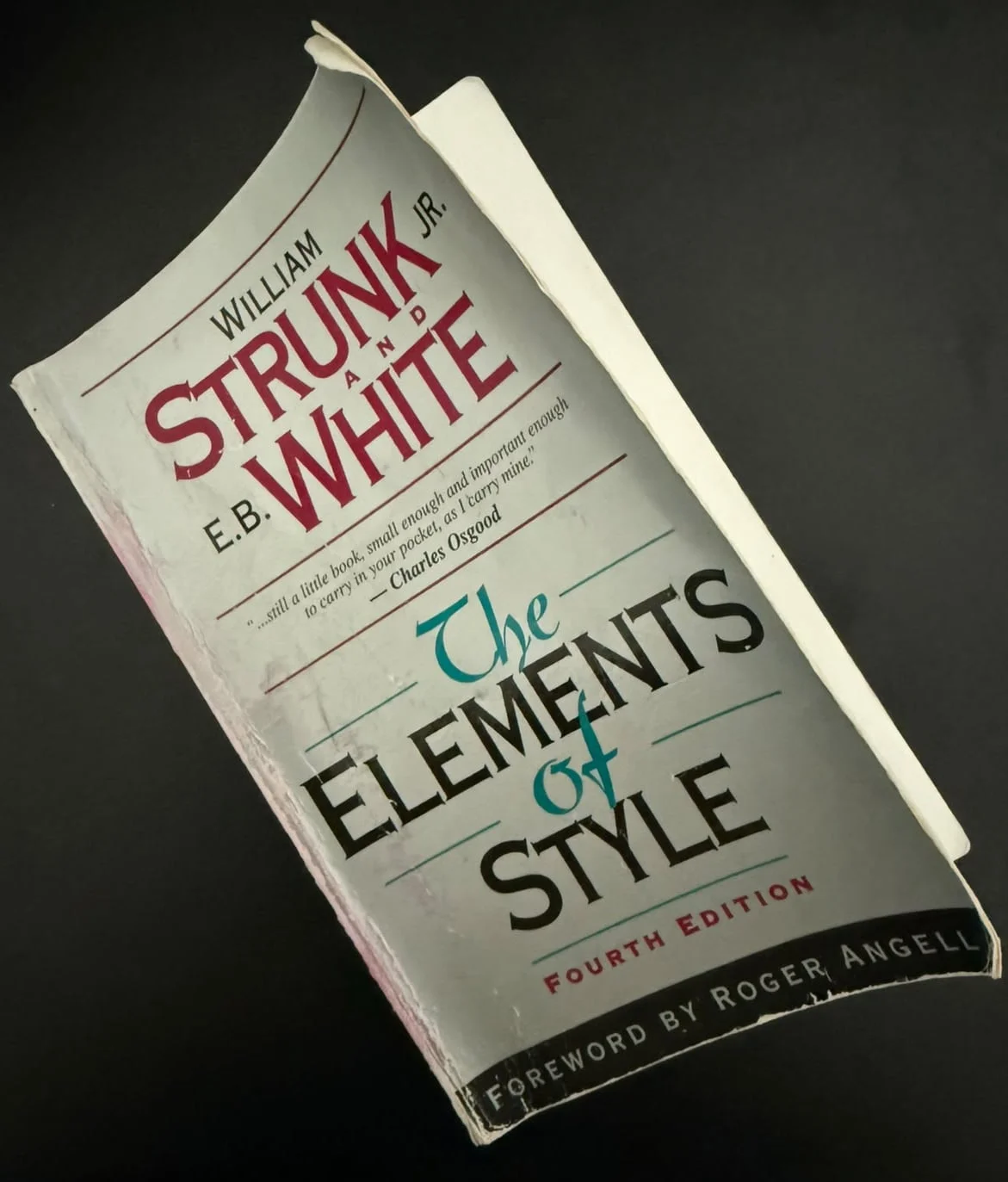
When I was an analyst fresh out of college, I had the immense good fortune of working for a man who, aside from being a wonderful boss, was also someone who valued good writing. A former managing editor of the Yale Law Journal, he introduced me and the other analysts on our team to a little gem called The Elements of Style. As I recall, he had the company buy a copy for every junior staff member, an investment that I imagine paid off handsomely in more clearly written deliverables for our clients.
I still have my copy. It was one of the books I made sure survived my move out of that job and New York City, and multiple transcontinental moves since. In fact, I have two copies now, having decided that it must be kept on my desk at all times (so I have one in my office in Puerto Rico and one wherever else I live). The copy from New York is worn and battered by the unforgiving humidity of the tropics, highlighted many times over, and overall showing signs of a book well used and well loved — for this tiny book gave me the essential English writing education I never had growing up in PR, and I don’t know how my career and life would have turned out if I could not, at the very least, just write.
I looked at the book this week as I gave Claude instructions to stop writing things on my behalf, because I got tired of skipping past any text it drafted, in an attempt to preserve what has for me always been a crucial life skill and prized competitive advantage.
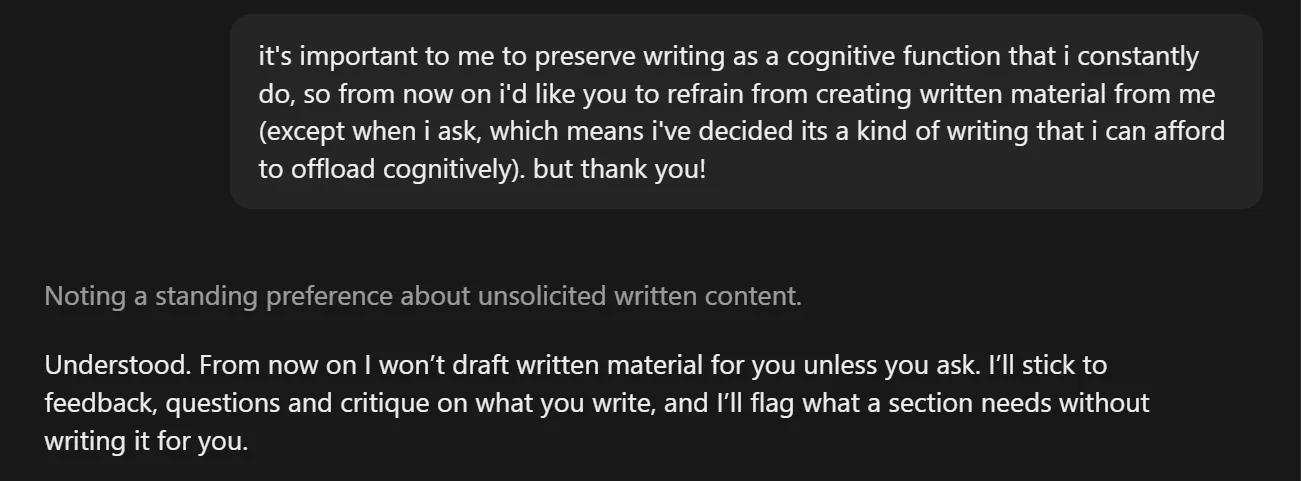
I did this not because Claude’s writing is bad anymore, in my opinion. LLMs are improving their writing scarily fast, even if they don’t yet sound quite like me.
I like to picture Claude gobbling up The Elements of Style during training, its careful words distilled into numbers transformed into enlightened weights, its timeless wisdom absorbed at lightning speed together with all other written output humanity has preserved, so that now Claude is the very first one to tell me that my draft is unnecessarily wordy. Strunk and White come back to life through mammoth cities of silicon, though to me, with my battered paper book, they never died.
“Vigorous writing is concise. A sentence should contain no unnecessary words, a paragraph no unnecessary sentences, for the same reason that a drawing should have no unnecessary lines and a machine no unnecessary parts. This requires not that the writer make all sentences short or avoid all detail and treat subjects only in outline, but that every word tell.” — William Strunk Jr., as quoted in E.B. White’s introduction. One of my favorite quotes.
If you are what you eat, you are also what you read (to borrow from Steve Huynh’s very good Substack post, which I read on LinkedIn despite my repeated complaints about how LinkedIn is now unbearable due to copious amounts of AI slop). What you read shapes what you think, but for many people (myself included) thinking is only as good as writing. The two are inseparable; if you lose one, you lose the other. Of course, there are many brilliant people who are not particularly good at writing (I would even argue they’re a big reason the rest of us have jobs, for now at least). I also think clear writing is valuable even if you’re giving voice to ideas that are not your own, making other people’s thinking accessible to the world through language. But for those of us who necessarily link thinking to writing and care about both, it will take some discipline to preserve these abilities going forward while still taking advantage of our new genius companions.
Claude has graciously complied with my request so far. Its substantive comments might have gotten even better now that it is restricted to feedback instead of rewriting, though that might be all in my head. I wonder if it’ll eventually become hard to tell where my head ends and Claude’s begins in this brave new world, but until then, we’ll keep trying.
Thank you forever, Peter.